Simplify Variances and Rezoning for Your Project

Rezio makes navigating the complex world of variances and rezoning simple, efficient, and stress-free. From understanding local requirements to preparing detailed submissions, we handle the heavy lifting so you can focus on building.

Why Variances and Rezoning Matter

Property restrictions and zoning regulations often stand between your project and its approval. Whether you need to adjust setback requirements, change a land use designation, or align with local zoning codes, variances and rezoning are critical for ensuring your vision becomes reality.

How Rezio Simplifies the Process

  • Research Local Zoning Codes

    We evaluate your project’s requirements and the local regulations to identify potential challenges.
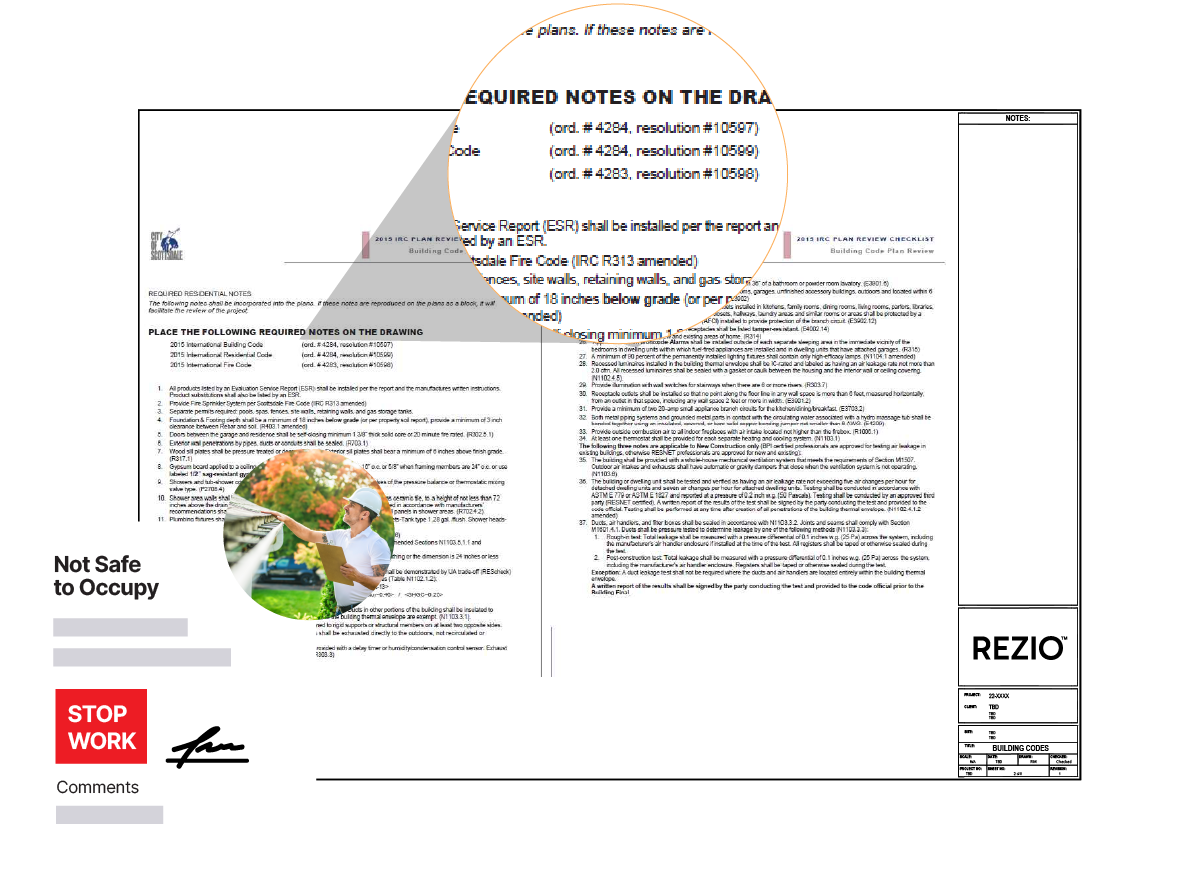
  • Prepare Supporting Documentation

    Rezio creates the required site plans, engineering reports, and applications to strengthen your case.
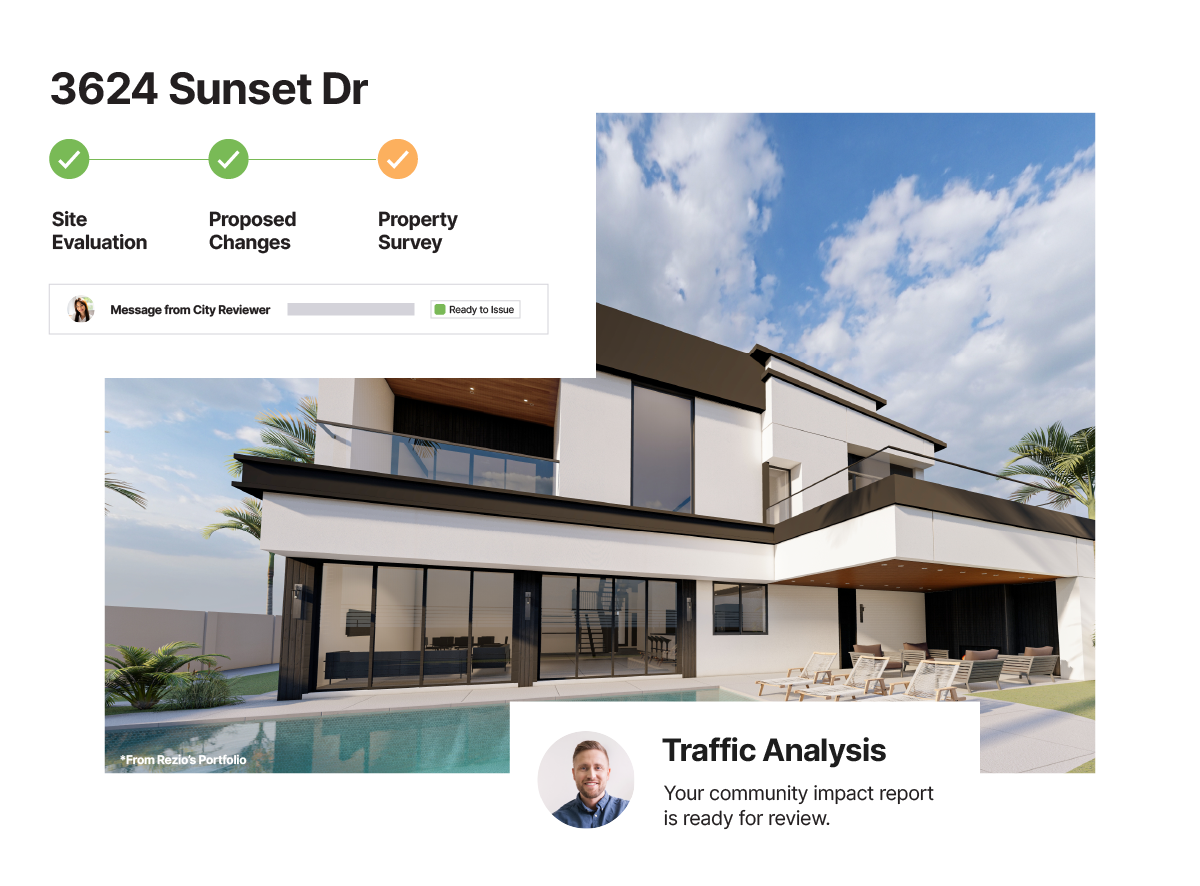
  • Manage the Submission Process

    We handle communication with local agencies and track the approval process to avoid delays.

Comprehensive Construction Drawings from Rezio

Common Reasons for Variances

Setback Adjustments

Allowing construction closer to property lines than zoning regulations permit. Ex: Building a home addition that encroaches on setback limits.

Height Restrictions

Increasing the allowable height for structures like multi-story buildings or towers. Ex: Adding a second story to a residential property in a single-story zone.

Lot Coverage

Requesting to exceed maximum coverage allowed for structures or paved areas. Ex: Building a larger home or additional structures on a smaller lot.

Non-Conforming Uses

Continuing or modifying uses that do not comply with current zoning but were allowed when initially built. Ex: Expanding a business operating in a residentially zoned area.

Parking Requirements

Reducing or modifying required parking spaces for commercial or residential developments. Ex: Requesting fewer parking spaces for a small café in a dense urban area.

Common Reasons for Rezoning

Changing Land Use Designations

Switching from one zoning category to another to allow new uses. Ex: Rezoning a residential property to commercial for a small business.

Increasing Density

Allowing higher-density developments, such as multifamily housing on single-family lots. Ex: Rezoning a single-family property for a duplex or townhomes.

Industrial to Mixed-Use or Commercial

Converting industrial land to allow retail, residential, or mixed-use developments. Ex: Redeveloping old warehouses into a retail or apartment complex.

Addressing Comprehensive Plan Changes

Aligning zoning designations with recent changes to the city’s comprehensive plan. Ex: Rezoning areas designated for future mixed-use development.

Correcting Zoning Errors or Inconsistencies

Adjusting zoning to match actual or historical uses of a property. Ex: Correcting outdated zoning that doesn’t reflect current usage patterns

“Zoning regulations impact 98% of land use decisions, making variances and rezoning critical for many construction projects.”

American Planning Association